Over the last few years, the workplace has been transformed faster than anyone expected. Artificial Intelligence has moved beyond chatbots and automation tools, giving birth to a new generation of digital workers known as AI Agents. What makes this shift alarming is the speed and scale at which these agents are entering industries. The question is no longer whether AI Agents will affect jobs, but how deeply they will reshape the future workforce.
The Sudden Rise of AI Agents
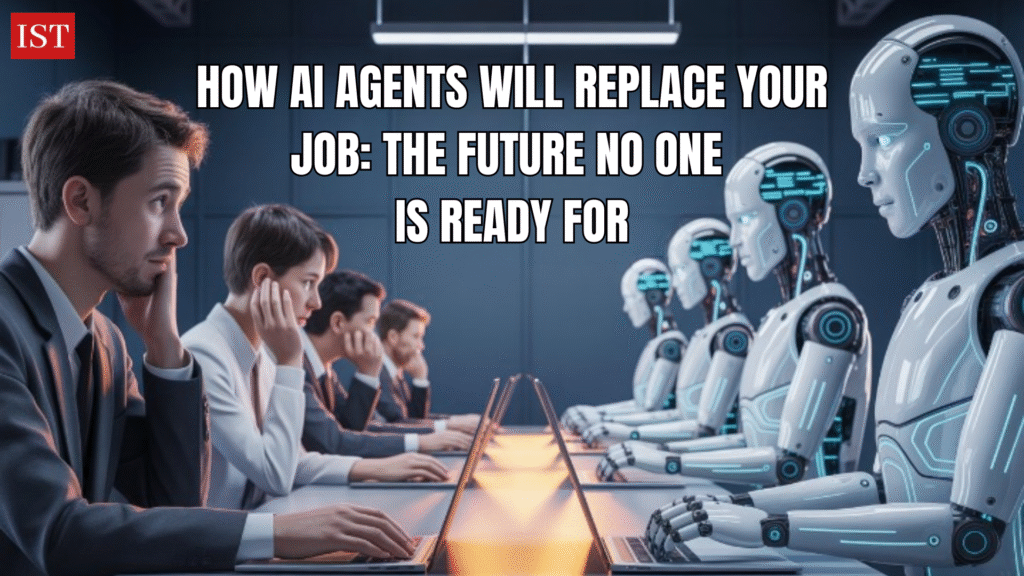
AI Agents have moved from experimental tools to fully capable autonomous systems. These agents can make decisions, learn from mistakes, understand tasks, and execute complex workflows—often better and faster than humans. Companies see them as efficient, error-free workers who never tire, never demand salaries, and operate 24/7. As a result, organizations worldwide are rapidly integrating AI Agents into essential operations, accelerating job displacement much sooner than predicted.
What Exactly Are AI Agents?
AI Agents are meant to behave as digital employees as opposed to traditional AI models, which rely on particular guidelines. They monitor activities, strategize, implement the actions and streamline processes without having human supervision at all times. They are able to browse apps, email, create, analyze data, operate systems and even solve problems alone. Such a combination of intelligence and automation has made them very attractive to jobs which have to be undertaken rapidly and consistently.
Why AI Agents Are Replacing Jobs Faster Than Expected
Businesses face constant pressure to cut costs, increase productivity, and deliver quick results. AI Agents offer a solution that human workers simply cannot match at scale. One AI Agent can often do the work of multiple employees while maintaining accuracy and improving over time. That’s why entire teams in customer support, data entry, back-office operations, IT support, and marketing are seeing their responsibilities shift to automation. The transformation is happening so rapidly that industries are struggling to adapt.
Industries Most at Risk
Sectors that rely heavily on repetitive or process-driven work are experiencing maximum disruption. Customer service departments are shifting to conversational AI that responds faster than human agents. Finance and banking operations increasingly use autonomous systems to detect fraud, analyze reports, and process transactions. Marketing teams depend on AI tools to generate content, monitor campaigns, and respond to trends within seconds. Even IT support roles are being handled by agents capable of troubleshooting and updating systems with minimal error.
Jobs That Will Survive the AI Shift
Despite the rapid rise of AI Agents, some professions remain relatively safe. Jobs requiring emotional intelligence, creativity, physical presence, or strategic decision-making still hold strong value. Human roles in healthcare, education, law, creative industries, and skilled trades cannot be replaced easily because they rely on empathy, critical thinking, and real-world interaction. AI Agents may assist these roles, but they are unlikely to replace them fully.
Reskilling Is the Only Way Forward
As the workplace is changing faster than ever, reskilling has become a necessity. The employees will need to understand how an AI system functions, embrace digital tools, and learn about automation systems like n8n or Zapier. The jobs of the future will demand the combination of human imagination and technological knowledge. Willing to change will not only survive but also succeed in an AI driven world Governments and companies globally are encouraging workers to upgrade their skills before the next wave of automation arrives.
Preparing for an AI-Driven Future
Instead of resisting AI, the smarter approach is to learn how to use it. Employees can automate repetitive tasks, increase their productivity, and focus on higher-value work by integrating AI tools into their workflow. The future job market will reward individuals who work alongside AI Agents rather than compete against them. Understanding digital systems and developing strategic thinking will become crucial for long-term career growth.
Conclusion
The AI Agents have already begun to revolutionize the industries, work procedures as well as the occupational roles at a magnitude that no one had imagined. They cause speed, efficiency, and intelligence which can no longer be overlooked by businesses. But this future does not necessarily have to be threatening. The actual problem- and the opportunity- is to find a way of adjusting to this new environment. Those who are able to adopt AI, reskill and specialize in jobs that machines cannot accomplish will be at the forefront of the future workforce in the world. The future of work is evolving at an exceptional pace and the winners will be the ones who keep up with the changes.
About the Author