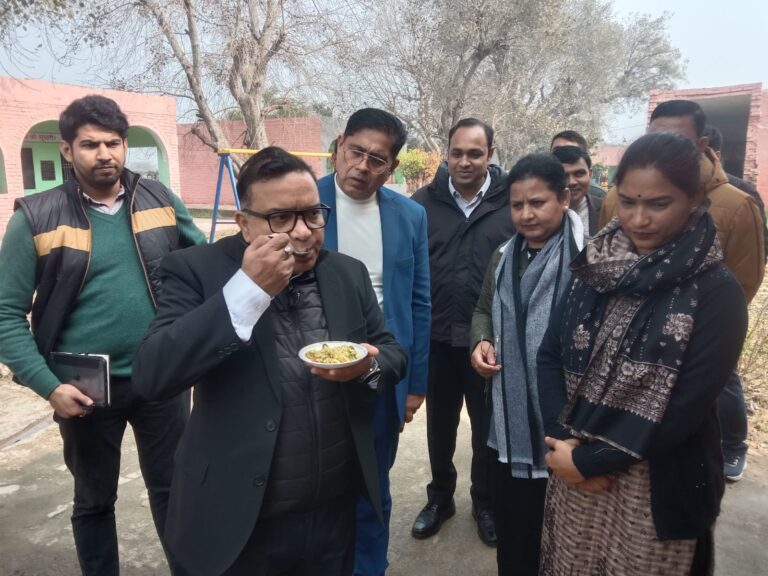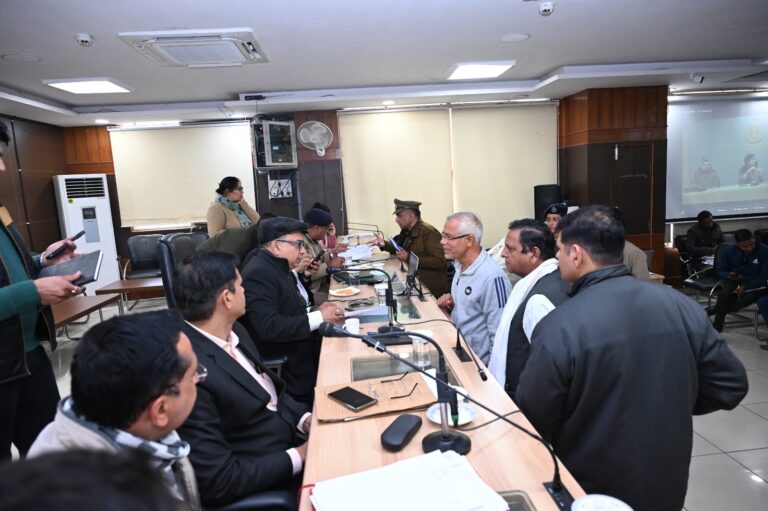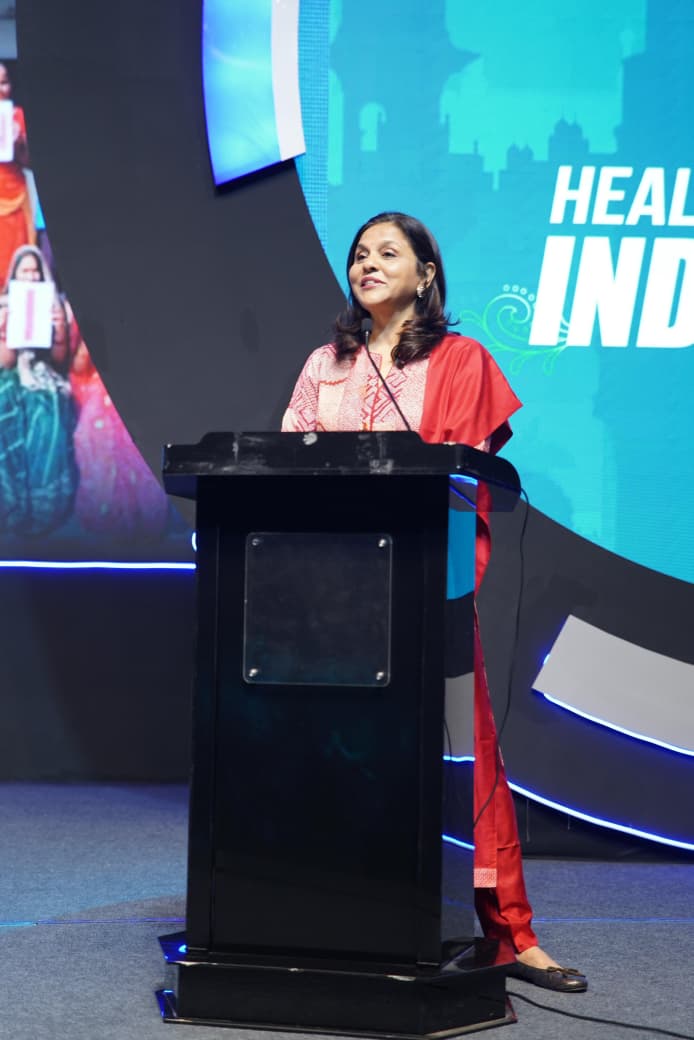
Experts and policymakers at the opening session of Apollo IHD 2026 in Hyderabad
Hyderabad witnessed the opening of the International Health Dialogue (IHD) 2026 on Friday, positioning India at the centre of global conversations on patient safety. Organised by Apollo Hospitals, the first day of the conference brought together clinicians, patient safety leaders, accreditation experts, policymakers, and technology partners from India and across the world.
With the theme “Global Voices. One Vision.”, Day 1 of IHD 2026 clearly established patient safety as a leadership and governance priority, shaped by equity and strengthened through responsible digital transformation. Speakers repeatedly highlighted that India’s experience of delivering healthcare at scale, while steadily improving quality standards and accountability, is increasingly influencing global thinking on patient safety and trust.
Patient safety as a leadership responsibility
The opening sessions stressed that patient safety can no longer be treated as a departmental or operational issue. Instead, it must be owned by organisational leadership and embedded into governance structures.
Participants agreed that sustainable safety outcomes require coordination across regulators, governments, accreditors, healthcare providers, and technology partners working as one ecosystem.
India’s healthcare journey, marked by high patient volumes and diverse population needs, was cited as a living example of how systems can evolve through learning, standardisation, and accountability.
Sharing knowledge beyond institutional boundaries
In her opening address, Dr. Sangita Reddy, Joint Managing Director, Apollo Hospitals Group, reflected on the founding purpose of the International Health Dialogue. She said the platform was created to ensure that valuable learning within hospitals and health systems does not remain siloed.
According to her, innovation in healthcare is happening every day, but its real value emerges only when knowledge is shared openly and applied across systems.
The scale of IHD 2026 itself reflected this global relevance, with thousands of registrations and wide participation from institutions across multiple countries.
Equity at the core of patient safety
Dr. Jayesh Ranjan, Special Chief Secretary for Industries & Commerce and Information Technology, Government of Telangana, highlighted that equity must sit at the centre of patient safety design.
He pointed out that patients are not a homogeneous group and that safety means different things depending on social, economic, and geographic realities.
He emphasised that designing systems for the most vulnerable populations ensures safety in real-world conditions. On digital health, he noted that the digital divide is not only about infrastructure, but also about mindset and inclusion.
Need for shared ownership across the ecosystem
Addressing the opening plenary, Dr. Madhu Sasidhar, President and CEO, Hospitals Division, Apollo Hospitals Enterprise Limited, underlined the importance of shared responsibility.
He stated that patient safety cannot be solved by any single stakeholder and must involve regulators, governments, accreditors, providers, and technology firms collectively.
According to him, patient safety must be viewed as an organisational leadership responsibility rather than a functional task assigned to specific departments.
Moving from reactive care to prevention
A strong theme throughout the day was the shift from reactive healthcare to early risk identification and prevention. Speakers noted that healthcare demand is growing rapidly, and linear solutions are insufficient to address complex, exponential challenges.
Discussions linked prevention to better outcome measurement, disciplined use of digital tools, and accountability-driven implementation. Technology, it was stressed, must support clinical judgement rather than replace it.
Global perspective on quality and safety
Providing a global lens, Dr. Carsten Engel, CEO of the International Society for Quality in Health Care (ISQua), reflected on the gap between long-standing attention to patient safety and actual improvements on the ground.
He cautioned against creating excessive procedures that do not translate into safer care, describing this as “safety clutter”.
He urged leaders to adopt a systems view, encouraging them to understand why actions made sense within specific contexts rather than focusing solely on compliance failures.
Zero harm as the only acceptable goal
Dr. Atul Mohan Kochhar, CEO of the National Accreditation Board for Hospitals & Healthcare Providers (NABH), highlighted that patient safety is not only a technical issue but also a moral, social, and economic imperative.
He emphasised that policies alone do not improve safety unless implemented effectively and stated that zero harm should be the only acceptable benchmark for patient safety risks.
AI collaboration to strengthen clinical decisions
During Day 1, Apollo Hospitals signed a Memorandum of Understanding with Roche Diagnostics India to explore the integration of advanced artificial intelligence into clinical decision-making.
The collaboration aims to translate AI-enabled insights into practical, clinician-friendly tools that support earlier risk identification, consistent clinical judgement, and safer care delivery at scale.
Culture as the foundation of transformation
Dr. Rohini Sridhar, Chief of Medical Services, Apollo Hospitals, highlighted the importance of culture-led transformation.
She noted that patient safety improves only when clinicians and organisations move together, adding that while technology accelerates learning, culture ultimately determines action.
She stressed that learning from harm in one unit must rapidly translate into improvements across the entire system.
Spotlight on digital health startups
IHD 2026 also featured a dedicated session for emerging digital health startups, offering them a platform to present solutions to investors.
The focus was on innovations addressing real clinical and operational gaps, including safer workflows, decision support, early risk detection, improved documentation, and scalable patient engagement.
This segment reinforced IHD’s emphasis on turning innovation into validated, implementable tools that strengthen safety, outcomes, and trust.
About the Author