Social media has become a daily companion for India’s young generation. From early morning scrolling to late-night reels, platforms like Instagram, YouTube, Snapchat and X are deeply woven into everyday life. For many young Indians, social media is not just a tool for communication but a space where identity, validation and self-worth are increasingly shaped.
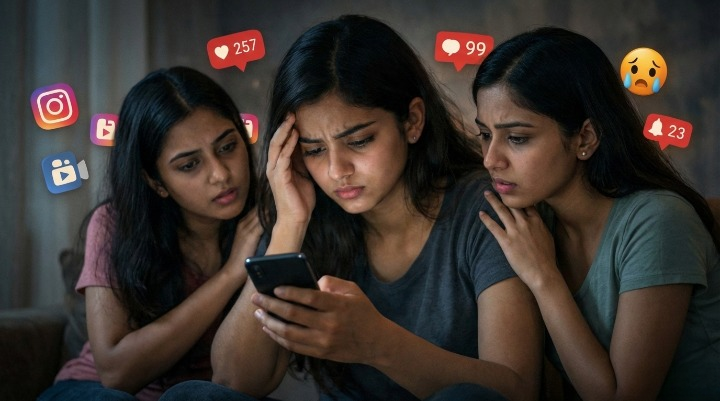
However, mental health experts and recent studies are raising serious concerns. While social media connects people digitally, its constant use is quietly affecting emotional well-being, concentration, sleep patterns and self-confidence among young users. The impact is often gradual, making it difficult to notice until stress, anxiety or loneliness becomes overwhelming.
The Growing Social Media Culture Among Indian Youth
India has one of the largest social media user bases in the world, with a major share coming from people under the age of 30. Affordable smartphones, low-cost internet and regional-language content have made social media accessible even in small towns and rural areas.
For students and young professionals, social media serves multiple purposes. It is used for entertainment, news updates, education, networking and even earning income. However, this constant digital engagement leaves very little mental space for rest and reflection. The pressure to stay online and updated has slowly become a social expectation rather than a choice.
Constant Comparison and Its Psychological Effect
One of the most harmful effects of social media is constant comparison. Young users are exposed to carefully edited images of success, beauty, travel, and lifestyle. These images often present an unrealistic version of life that does not reflect everyday struggles.
Over time, this comparison creates feelings of inadequacy. Many young people begin to believe that they are falling behind, even when they are doing well by normal standards. Psychologists say this comparison culture lowers self-esteem and increases dissatisfaction with real life, especially among teenagers and college students.
Impact on Self-Confidence
When likes, views and comments become measures of self-worth, confidence becomes fragile. A post that performs poorly can lead to self-doubt, while viral content creates pressure to repeat the same standard. This cycle can cause emotional dependency on digital approval.
Anxiety, Stress and Fear of Missing Out
The fear of missing out, commonly known as FOMO, is another growing issue. Social media constantly shows what others are doing, attending or achieving. This creates a sense of urgency and restlessness, making young people feel they must always be engaged or they will miss something important.
This constant mental alertness leads to anxiety and stress. Notifications, messages and endless content prevent the mind from relaxing. Mental health professionals note that many young patients report feeling mentally tired even after physically resting.
Sleep Disruption and Mental Fatigue
Late-night scrolling has become a common habit among Indian youth. Many young people use social media in bed, often losing track of time. Exposure to screens before sleep interferes with natural sleep cycles, reducing sleep quality.
Lack of proper sleep affects mood, concentration and emotional control. Over time, it increases the risk of anxiety and depressive symptoms. Students, in particular, experience reduced academic performance due to poor focus and constant fatigue.
Social Isolation Despite Being Connected
Ironically, increased online interaction is leading to reduced real-life communication. Many young people feel uncomfortable having deep conversations offline. Social media provides controlled interactions, where one can respond, delete or ignore messages.
This shift reduces emotional bonding and social skills. Mental health experts warn that long-term social isolation, even in a digitally connected world, can lead to loneliness and emotional numbness.
The Role of Influencer Culture
Influencer culture plays a significant role in shaping young minds. Many influencers promote unrealistic beauty standards, luxury lifestyles and constant productivity. While not all influencers cause harm, the lack of transparency about effort, failure and mental struggles creates a distorted reality.
Young viewers may feel pressured to match these standards without understanding the background resources involved. This creates frustration and unrealistic expectations from life and career growth.
Academic and Career Pressure Amplified Online
Social media also amplifies academic and career pressure. Success stories, high-paying jobs and early achievements are frequently highlighted online. While such stories can motivate, they can also create unnecessary stress.
Students may feel behind in life, even when they are progressing at a healthy pace. Career anxiety increases when success is portrayed as quick and effortless, ignoring real-world challenges.
Awareness Is Increasing, but Action Is Slow
Mental health awareness is growing in India, especially among urban youth. Conversations around anxiety, therapy and emotional well-being are becoming more open. However, responsible social media use is still not practiced widely.
Experts suggest setting screen-time limits, taking digital breaks and prioritising offline activities. Schools and parents also have a role in educating young users about healthy digital habits instead of complete restriction.
Who Should Be Most Careful?
- Teenagers and college students
- Young professionals working long hours
- Content creators and heavy social media users
- Individuals already dealing with stress or anxiety
These groups are more vulnerable to emotional exhaustion caused by excessive online engagement.
Conclusion
Social media is not inherently harmful, but its unchecked and excessive use is quietly affecting the mental health of India’s young generation. Issues like anxiety, low self-esteem, sleep problems and loneliness are becoming more common, often without clear warning signs.
The solution does not lie in quitting social media completely but in using it mindfully. Creating balance, setting boundaries and valuing real-life connections are essential steps toward protecting mental peace in an increasingly digital world.
About the Author