The issue of Aravalli Hills illegal mining has emerged as one of the most serious environmental challenges in India. The Aravalli Range, considered one of the oldest mountain systems in the world, stretches across Rajasthan, Haryana, Delhi, and Gujarat. These hills act as a natural barrier against desertification, air pollution, and ecological imbalance. However, despite repeated bans and strict orders from the Supreme Court, illegal mining activities continue to threaten this fragile ecosystem.
Over the years, environmentalists, courts, and policy experts have raised concerns about how unchecked mining is destroying forests, groundwater systems, and wildlife habitats. The gap between judicial orders and ground-level enforcement has only widened, turning the Aravalli Hills into a symbol of administrative failure and environmental neglect.
Supreme Court Orders on Aravalli Hills Illegal Mining
The Supreme Court of India has repeatedly intervened to protect the Aravalli Hills from illegal mining. In several landmark judgments, the court confirmed that mining in forests and eco-sensitive areas of the Aravalli range is strictly prohibited without environmental clearance.
In a key ruling, the Supreme Court upheld the complete ban on mining activities in notified forest areas, particularly in Haryana and Rajasthan. The court made it clear that any form of mining without prior environmental approval violates environmental laws and constitutional rights related to a healthy environment.
Furthermore, the court emphasized that the Aravalli Hills play a crucial role in maintaining ecological balance in Delhi–NCR. As a result, state governments were directed to identify illegal mines, shut them down immediately, and restore damaged land.
Despite these orders, enforcement on the ground remains weak.
Ground Reality: Why Illegal Mining Continues
Although strict judicial directions exist, the reality on the ground paints a different picture. Aravalli Hills illegal mining continues due to a combination of administrative loopholes, political influence, and lack of monitoring.
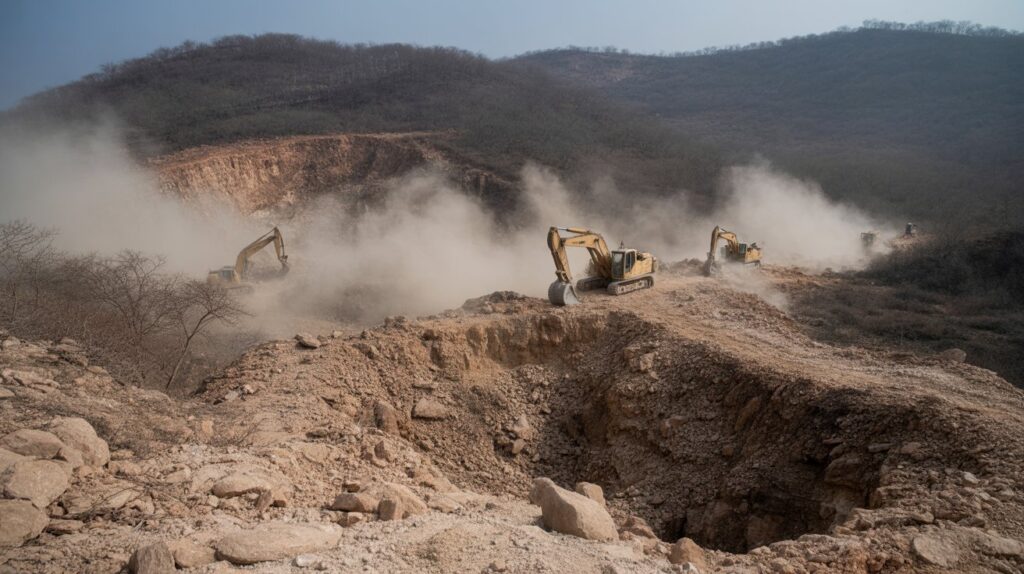
In many regions of Haryana and Rajasthan, illegal stone crushing units and mining operations function under the cover of night. Local reports suggest that temporary shutdowns are followed by silent resumptions once inspections are over. In some cases, mining leases are misused or extended beyond permitted areas.
Moreover, limited staff, outdated surveillance systems, and weak coordination between departments provide ample opportunity for violators to operate without fear. Environmental clearances are often bypassed, and restoration efforts exist only on paper.
As a result, the gap between Supreme Court directives and actual enforcement continues to widen.
Environmental Impact of Aravalli Hills Illegal Mining
The environmental impact of illegal mining in the Aravalli Hills is severe and long-lasting. One of the most visible consequences is deforestation. Large patches of forest land have been cleared to extract stones and minerals, leading to habitat loss for birds and wildlife.
Another major concern is groundwater depletion. The Aravalli range acts as a natural groundwater recharge zone. Excessive mining disrupts underground water channels, leading to falling water tables in nearby villages and cities. Many regions now face water scarcity due to damaged aquifers.
Additionally, illegal mining contributes significantly to air pollution in Delhi–NCR. Dust particles released from mining and stone crushing travel long distances, worsening air quality and increasing respiratory illnesses.
Soil erosion, rising temperatures, and loss of biodiversity are also direct outcomes of unchecked mining activities in the region.
Impact on Climate and Public Health
Beyond environmental damage, Aravalli Hills illegal mining has serious implications for climate stability and public health. The destruction of natural green barriers accelerates desertification, allowing hot winds from the Thar Desert to move toward northern India.
This has resulted in increased heat waves and unpredictable weather patterns. For nearby communities, exposure to dust and polluted air has led to higher cases of asthma, lung infections, and skin diseases.
Public health experts have repeatedly warned that continued destruction of the Aravalli ecosystem could make parts of Delhi–NCR environmentally unlivable in the long run.
Role of State Governments and Authorities
State governments in Haryana and Rajasthan are legally responsible for enforcing mining bans and protecting forest areas. While occasional drives against illegal mining are conducted, long-term solutions remain absent.
Experts believe that real-time satellite monitoring, strict penalties, and transparent reporting mechanisms are essential to curb illegal mining. Without accountability and sustained action, judicial orders alone cannot save the Aravalli Hills.
Way Forward: Protecting the Aravalli Hills
To address the crisis of Aravalli Hills illegal mining, a multi-pronged approach is required. Stronger enforcement of Supreme Court orders, regular environmental audits, and public participation are crucial.
Community awareness can also play a vital role. When local residents are involved in monitoring and reporting illegal activities, enforcement becomes more effective. At the policy level, ecological restoration projects must be implemented seriously, not just announced.
Protecting the Aravalli Hills is not just an environmental issue; it is a matter of public interest, climate resilience, and sustainable development.
Conclusion
The ongoing destruction caused by Aravalli Hills illegal mining highlights a serious disconnect between legal frameworks and ground realities. Despite clear Supreme Court orders, weak enforcement continues to endanger one of India’s most important natural ecosystems. If immediate and consistent action is not taken, the long-term consequences will be irreversible. Saving the Aravalli Hills is essential for environmental security, public health, and the future of northern India. The time to act is now.
About the Author