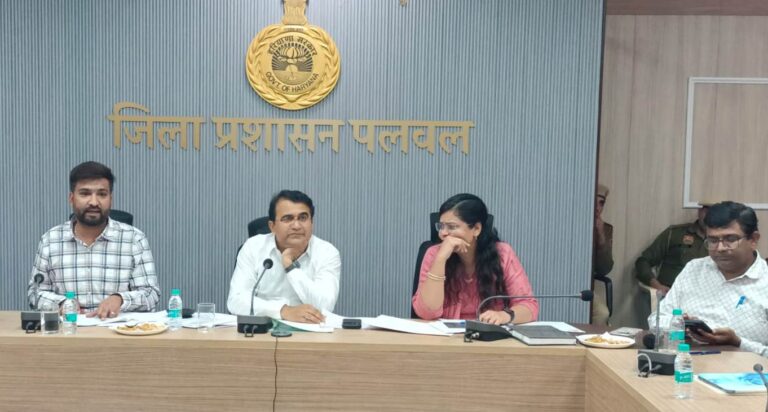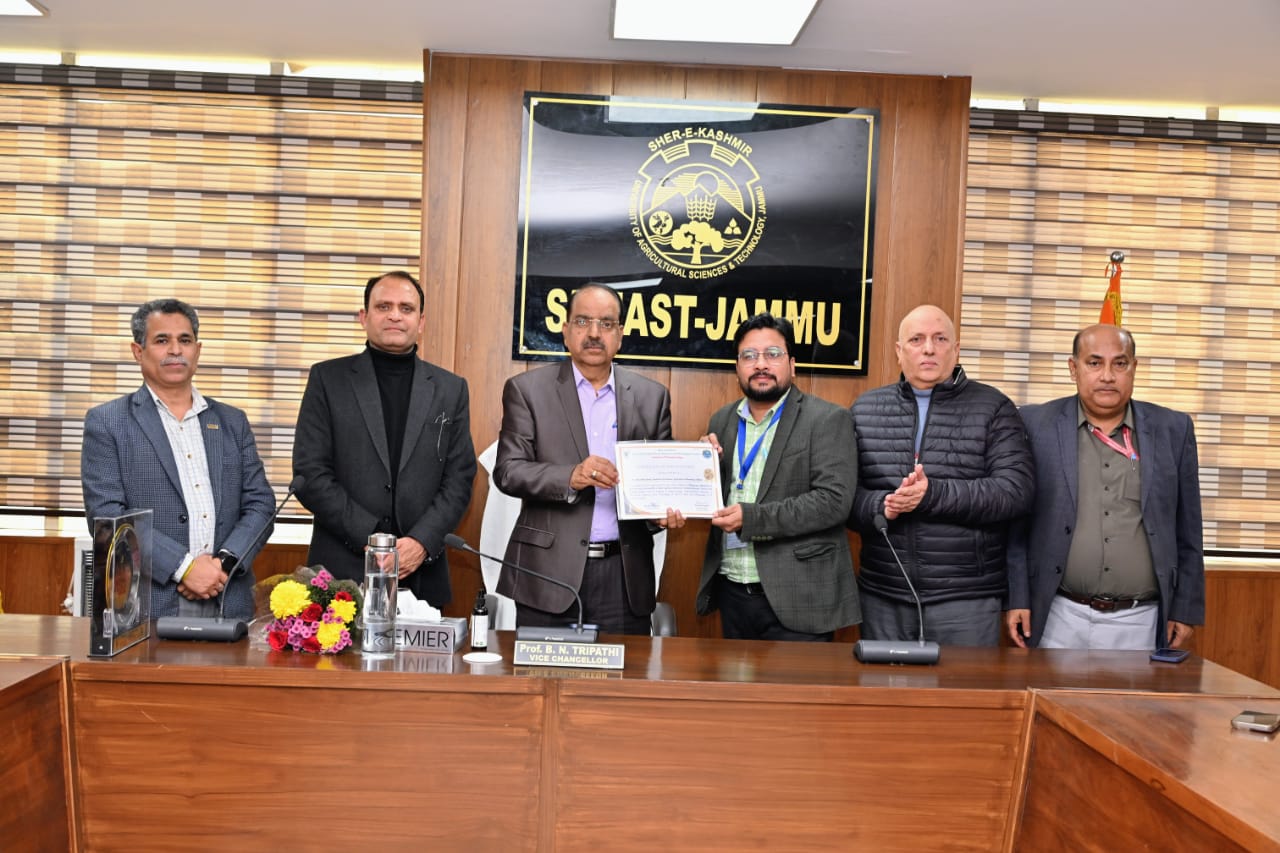
Scientists and faculty members during the valedictory session of the ICAR-sponsored Winter School at SKUAST Jammu.
The ICAR-sponsored Winter School at SKUAST Jammu has successfully concluded at the Institute of Biotechnology, Sher-e-Kashmir University of Agricultural Sciences and Technology of Jammu, marking an important step in strengthening advanced research capacity in molecular biotechnology and genomics.
The 21-day national-level training programme brought together scientists and academicians from different parts of the country, offering them structured exposure to modern genomic tools increasingly used in agricultural and biological research.
Background and purpose of the Winter School
The Winter School was organised with the support of the Indian Council of Agricultural Research (ICAR) and focused on the theme “Molecular Mapping of Genome and Genes/QTL with Special Reference to Biotic and Abiotic Stress and Quality Traits.” The programme was conducted under the patronage of SKUAST Jammu Vice Chancellor Prof. B. N. Tripathi and under the academic guidance of Dr. R. K. Salgotra, Director of the Institute of Biotechnology.
The primary objective of the initiative was to enhance human resource development in advanced molecular and genomic technologies, which play a crucial role in improving crop resilience, productivity, and quality under changing climatic conditions.
Academic focus of the ICAR-sponsored Winter School at SKUAST Jammu
A total of 23 participants representing various states and allied scientific disciplines took part in the programme. The Winter School featured expert lectures by renowned scientists from leading national research institutions, enabling participants to gain insights into recent developments in genomics, computational biology, and molecular breeding.
These interactions allowed participants to understand how emerging technologies are reshaping agricultural research and how interdisciplinary approaches are becoming essential for addressing complex biological challenges.
Training modules and hands-on exposure
The programme was designed to balance theoretical understanding with practical application. Participants received intensive hands-on training using modern laboratory facilities, ensuring direct exposure to advanced research methodologies.
Key areas covered during the Winter School included molecular mapping of genes and quantitative trait loci (QTLs), next-generation sequencing (NGS) platforms, bioinformatics software applications, pangenomics, advanced phenotyping techniques, and high-end biochemical approaches. This comprehensive coverage aimed to equip scientists with practical skills applicable across diverse research environments.
Address by the Vice Chancellor
During the valedictory session, Vice Chancellor Prof. B. N. Tripathi emphasised the growing significance of biotechnology and genomics in addressing challenges related to climate resilience, sustainable agriculture, and food security. He highlighted that advanced molecular tools are no longer optional but essential for future-ready agricultural research.
He encouraged participants to make effective use of the knowledge and technical skills gained during the training and to apply them in their ongoing and future research programmes. Prof. Tripathi also invited scientists to explore collaborative research opportunities with SKUAST Jammu in cutting-edge areas of biotechnology.
Strengthening institutional capacity
The Vice Chancellor further underlined the need to organise similar intensive training programmes for in-house faculty members from allied disciplines at SKUAST Jammu. According to him, equipping faculty with modern biotechnological tools would strengthen interdisciplinary research and improve the overall academic and research ecosystem of the university.
Such initiatives align with the broader goal of transforming SKUAST Jammu into a centre of excellence for advanced agricultural and biotechnological research.
conclusion
The successful completion of the Winter School at SKUAST Jammu highlights the importance of well-structured, skill-oriented training programmes in building a future-ready scientific workforce. With ICAR’s continued support, initiatives like this play a vital role in advancing India’s agricultural research capabilities through modern biotechnology and genomics.
About the Author