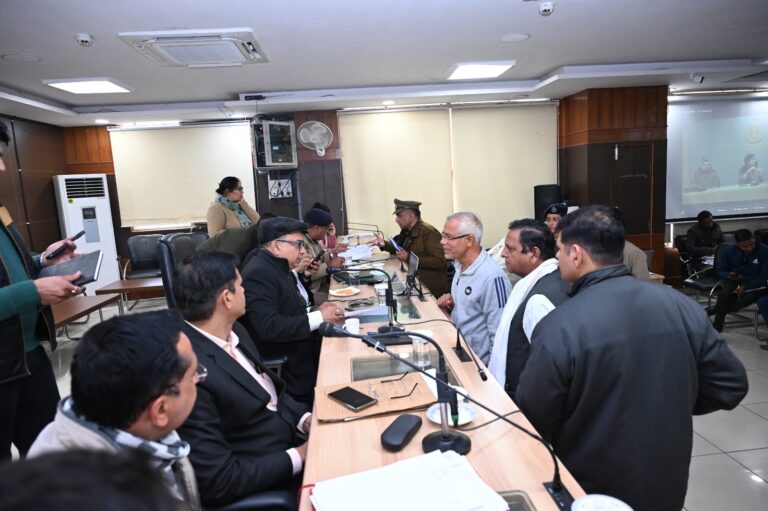
Jammu Agriculture University recently hosted the Northern Regional Meeting of the Commission for Agricultural Costs and Prices (CACP), focusing on the Price Policy for Kharif Crops for the 2026–27 marketing season. The event saw participation from State Governments, Union Territories, and representatives from key northern states including Punjab, Haryana, Uttar Pradesh, Himachal Pradesh, and Uttarakhand.
Inaugural Session and Key Highlights
The meeting was inaugurated by Prof. Vijay Paul Sharma, Chairman of CACP, in the presence of Prof. B.N. Tripathi, Vice Chancellor of SKUAST-Jammu. Statutory officers, directors of line departments, and agriculture officials participated to deliberate on crop pricing strategies and farmer welfare measures.
Prof. Sharma, in his address, stressed the changing dynamics of agricultural markets. He discussed the challenges farmers face, such as rising input costs, market volatility, and limited bargaining power. He also highlighted the delicate balance between increasing farm-gate prices and controlling consumer prices, noting that farmers themselves are affected by inflation.
Significance for Jammu & Kashmir
Prof. B.N. Tripathi emphasized the unique challenges faced by Jammu & Kashmir farmers, including limited market access and delayed price discovery, which often lead to distress sales despite adequate production. He pointed out that stable price policies are crucial for the region’s farm incomes, production decisions, and overall food security.
Insights from CACP Members
Mr. Cyriac George, Member Secretary of CACP, highlighted the importance of regional consultations to capture local cost structures and market realities, ensuring informed policy-making. Rattan Lal Daga, Member (Non-Official), spoke on the role of Minimum Support Price (MSP) as a protective tool for small and marginal farmers. MSP is critical for maintaining income security amid rising cultivation costs and uncertain markets.
Regional Perspectives and Recommendations
Officials from Jammu & Kashmir, Haryana, Himachal Pradesh, Punjab, and Uttar Pradesh shared their state-specific inputs on cultivation costs, marketing challenges, and support mechanisms for Kharif crops. Nitu Gupta, Secretary of the Agriculture Production Department, Jammu & Kashmir, elaborated on procurement mechanisms and highlighted the influence of diverse agro-climatic conditions on production costs.
Role of University and Organizing Team
The event was formally welcomed by Dr. Sudhakar Dwivedi, Dean of Student Welfare, while Dr. Pawan Kumar Sharma facilitated the proceedings. Other key contributors included Dr. L.K. Sharma, Dr. Anil Bhat, and Dr. Prem Kumar, ensuring smooth conduct of the meeting. The vote of thanks was delivered by Mr. Anil Gupta, Director of Agriculture, Jammu.
Key Discussions and Takeaways
The meeting emphasized several important aspects:
- Understanding the realistic cost of cultivation for Kharif crops across northern states.
- Addressing market volatility and ensuring timely price discovery.
- Enhancing farmer incomes without causing undue inflation for consumers.
- Strengthening MSP mechanisms as a safeguard for small and marginal farmers.
These discussions are expected to inform the final recommendations of CACP for the 2026–27 Kharif crop season, providing practical guidelines for both policymakers and farmers.
About the Author