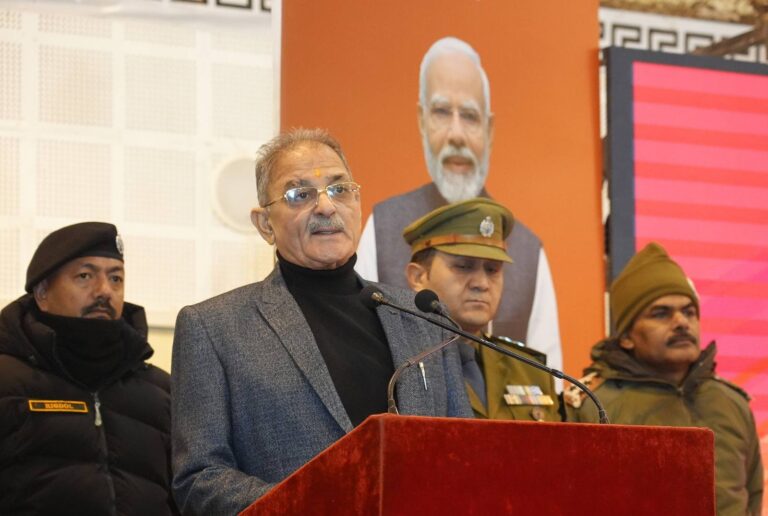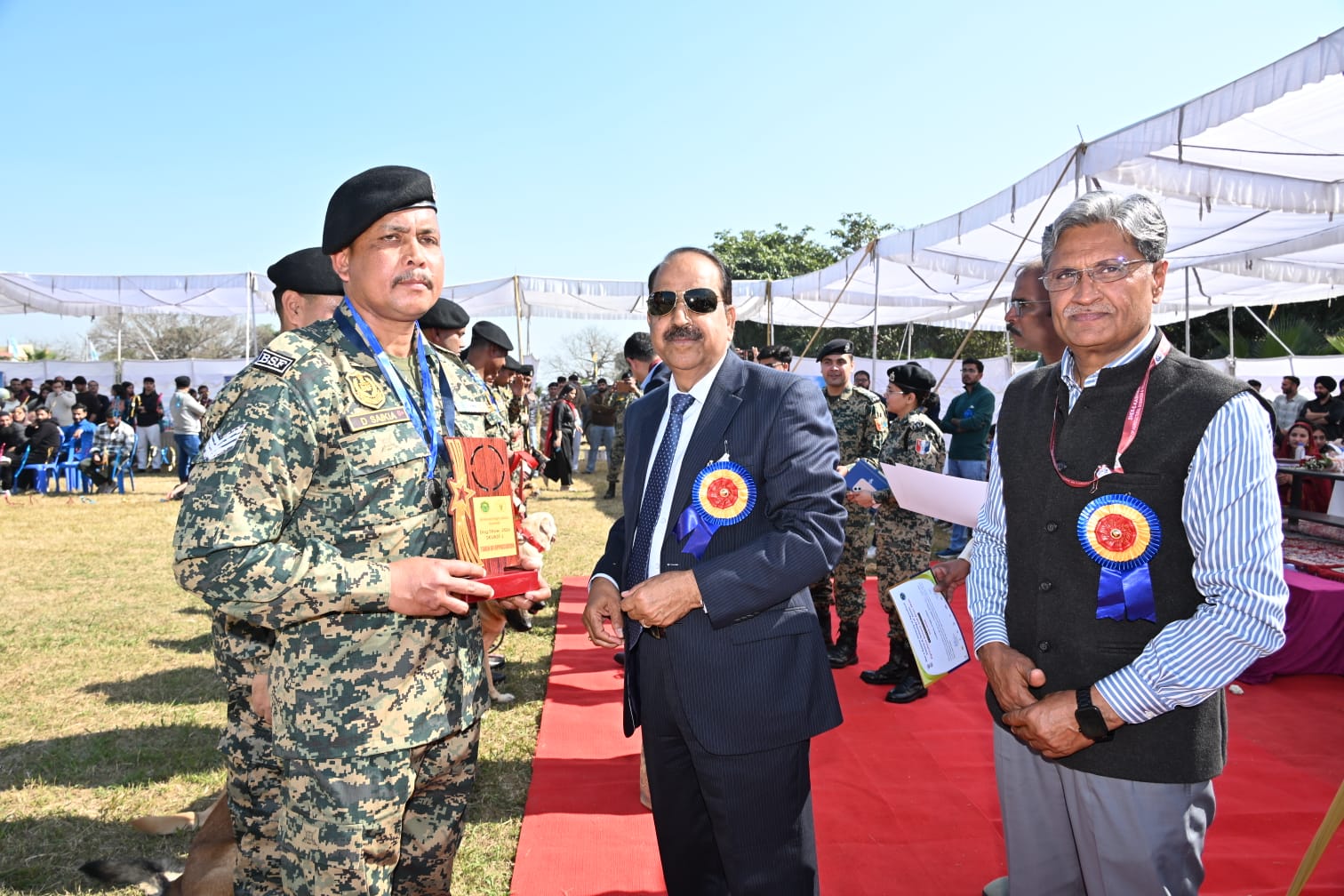
Industry leaders, academicians and farmers interact during Kisan Mela 2026.
Kisan Mela 2026 entered its second day with a strong focus on collaboration, innovation and community engagement. Hosted at Sher-e-Kashmir University of Agricultural Sciences and Technology of Jammu (SKUAST-Jammu), the Agriculture Summit brought together policymakers, industry leaders, researchers and farmers on a common platform.
The day’s events highlighted the growing need to connect agricultural research with market realities. Through technical deliberations, outreach programmes and public participation, the university underscored its commitment to sustainable and inclusive agricultural development.
Kisan Mela 2026 Hosts Industry–Academia–Farmer Interface
A major highlight of the day was the Industry–Academia–Farmer Meet held at the university’s main campus in Chatha. More than 30 industries, agri-startups and Farmer Producer Organizations (FPOs) participated in the interaction. The objective was to create a structured dialogue between industry stakeholders, faculty members, students and farmers.
In his inaugural address, Vice-Chancellor Prof. B. N. Tripathi emphasized the importance of sustained collaboration between universities and industry. He noted that agricultural education must align with field-level challenges and evolving market demands. Initiatives such as Memorandums of Understanding with leading companies, industry-sponsored internships, the appointment of Professors of Practice and the establishment of the Bayer Learning Centre were cited as steps towards enhancing employability and entrepreneurship.
Dr. Owais Ahmad, IAS, Director, Food, Civil Supplies & Consumer Affairs, Kashmir, who attended as Guest of Honour, stressed the need for structured internship programmes. He highlighted that active industry involvement is essential for preparing agriculture graduates with practical skills and job readiness.
Technical sessions and panel discussions further examined ways to bridge the industry–academia gap. Experts underlined the need for collaborative research, continuous stakeholder engagement and skill-based training to strengthen the agricultural ecosystem.
Dog Show Draws Public Attention
Apart from academic discussions, the second day of Kisan Mela 2026 witnessed a lively Dog Show that attracted significant public interest. Over 70 dogs representing 23 breeds participated in the competition. Demonstrations by the Border Security Force (BSF), Crime Branch and Jammu & Kashmir Police added a professional dimension to the event.
A Pakistani Mastiff (Bully), owned by Shri Rajinder Choudhary, was declared the Overall Champion. The event not only entertained visitors but also promoted awareness about responsible pet care and animal management practices.
Farmer Awareness and Agro-Advisory Outreach
The Agrometeorology Section of SKUAST-Jammu organized a farmer awareness programme on “Resource Conservation and High Income through Agro-Advisory Services” under the Grameen Krishi Mausam Sewa initiative. More than 100 farmers attended the session.
Experts explained how weather-based advisories and scientific crop planning can help reduce input costs and improve farm income. Discussions also focused on biodiversity conservation and the role of tree plantation in addressing climate change. On the occasion, 210 mango and citrus saplings were distributed among farmers to encourage sustainable horticulture practices.
Promoting Integrated Agricultural Development
Sports and recreational activities were also organized, adding a festive spirit to the event and encouraging youth participation. The university administration emphasized that such summits are not limited to exhibitions but are designed to integrate research excellence, industry collaboration, environmental awareness and farmer empowerment.
As agriculture faces challenges such as climate variability, resource constraints and market uncertainties, multi-stakeholder engagement is increasingly viewed as a practical way forward. Events like Kisan Mela 2026 aim to translate academic research into field-level solutions.
What Will Be the Impact of This News?
Kisan Mela 2026 demonstrates how coordinated efforts between universities, industries and farmers can enhance agricultural productivity and sustainability. Farmers gain direct access to technological innovations and market insights, while students benefit from industry exposure and internship opportunities.
The emphasis on climate resilience, biodiversity and resource conservation could also influence future agricultural policies and development strategies in the region.
Conclusion
Kisan Mela 2026 reflects a comprehensive approach to agricultural growth that balances research, industry partnership and farmer welfare. By fostering dialogue and practical collaboration, the summit signals a progressive step towards inclusive and sustainable agricultural development.
About the Author