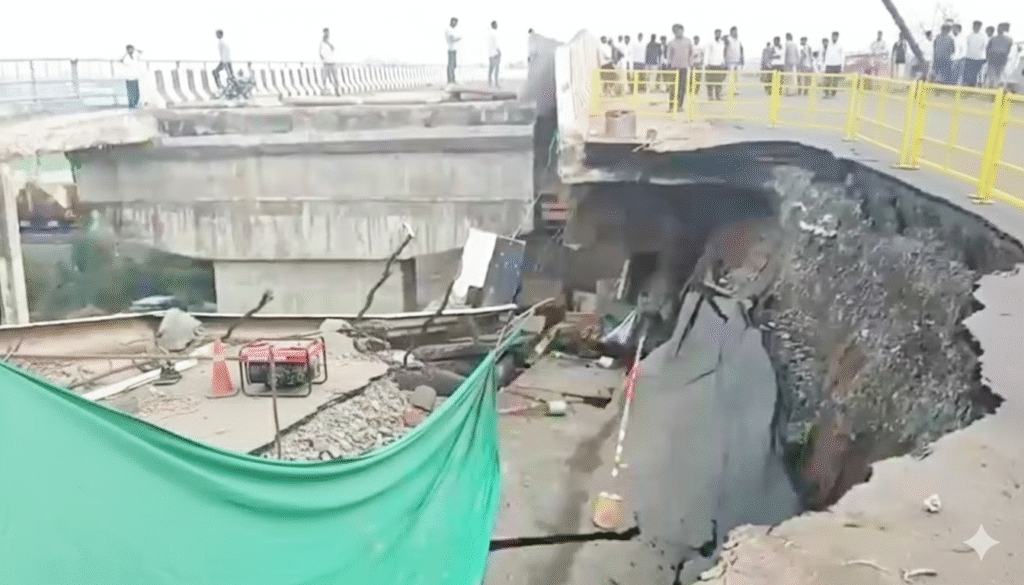
A reported overbridge collapse on National Highway 45 (NH-45) in Madhya Pradesh has sparked widespread concern over public infrastructure safety. The incident, which allegedly occurred along the Jabalpur–Bhopal route, has drawn attention to construction standards, project supervision, and long-term maintenance practices. Authorities have initiated an inquiry to determine the exact cause of the structural failure and assess accountability.
What Happened?
According to initial reports circulating locally and on social media, a portion of an overbridge on NH-45 gave way, causing disruption to vehicular movement. Visuals shared online showed damaged concrete sections, prompting immediate public reaction and debate over infrastructure quality.
At the time of writing, officials are verifying the structural condition of the remaining sections of the bridge. There has been no confirmed official statement detailing the final technical cause of the collapse.
Where and When Did the Incident Occur?
The reported collapse took place on National Highway 45 (NH-45) in Madhya Pradesh, a crucial roadway connecting major cities including Jabalpur and Bhopal. The highway plays an important role in passenger and commercial transport across the region.
While the exact date and time are being confirmed through official sources, local reports suggest the incident occurred recently, prompting swift administrative attention.
Who Is Involved?
Large-scale highway infrastructure projects typically involve multiple stakeholders, including:
- Engineering contractors
- Construction firms
- Supervising consultants
- State or central infrastructure authorities
Responsibility, if any, will depend on the findings of the technical investigation. At this stage, no specific individual or department has been officially held accountable.
Possible Causes Under Examination
Though the official cause remains under investigation, infrastructure experts generally examine several key factors in such cases:
1. Structural Design Flaws
Any miscalculation in load-bearing capacity or design integrity can compromise long-term stability.
2. Construction Quality Issues
Use of substandard materials or deviations from approved construction standards may weaken structural durability.
3. Maintenance and Inspection Gaps
Regular structural audits are essential for bridges. Delayed inspections or ignored warning signs can increase risk.
Authorities are expected to conduct a detailed structural audit and technical review to determine the precise reason behind the incident.
Official Statements and Administrative Action
As of now, officials have reportedly begun assessing the damage and reviewing project documentation. A formal inquiry or safety audit is likely to be conducted to establish facts.
Government authorities typically follow a standard protocol in such situations, which may include:
- Technical evaluation by structural engineers
- Review of construction records
- Safety assessment of adjacent sections
- Accountability determination if negligence is found
Further updates are awaited through official press releases.
Public Reaction and Infrastructure Safety Debate
The NH-45 overbridge collapse has reignited conversations about infrastructure monitoring and public safety in India. Citizens and transport users expect projects funded through public resources to meet strict safety and durability standards.
Infrastructure experts often emphasize transparency, independent audits, and long-term maintenance planning as critical components of sustainable development.
What Happens Next?
The next steps in the NH-45 bridge collapse case are likely to include:
- Completion of a technical investigation
- Release of an official report
- Repair or reconstruction planning
- Preventive inspections of similar structures
Depending on findings, authorities may take corrective or disciplinary action.
Until the investigation concludes, conclusions about fault or negligence remain speculative.
About the Author